Upholstery Cleaning in Bismarck, ND
Cleaned to Suit the Fabric
Fabric furniture collects dust, body oils, and everyday soil over time. A professional clean lifts them out of sofas, chairs, and other upholstered pieces. The method depends on the fabric, so we check what yours is made of and read its care label before we start, because some fabrics take water well and others need a gentler approach.
At a glance: this page explains what furniture care labels mean, how to prepare your furniture, what happens on the day, how to look after it while it dries, and answers to common questions.
What Do Furniture Care Labels Mean?
A care label is a small tag, usually found under a seat cushion or on the frame, that says which cleaning methods are safe for the fabric. It uses a letter code, and that code decides what we can use on your piece.
W: Water-Based Cleaning
W means a water-based cleaning method is safe for the fabric. That includes hot water extraction, which you can read about in how the hot water method works.
S and WS: Solvent, or Either
S means use a solvent-based cleaner only, because water can leave marks or damage the fabric. WS means either a water-based cleaner or a solvent is safe, so we can choose whichever suits the piece.
X: Vacuum or Light Brushing Only
X means the fabric should not be cleaned with water or solvent. What can be done is limited to vacuuming and light brushing, and we’ll tell you that up front rather than risk damaging the piece.
No Label, or Not Sure?
Labels wear off or go missing. If yours has, we identify the fabric and test a small hidden area to see how the dye and fibers respond, then choose the gentlest method that will work.
What Different Furniture Needs
Upholstery collects body oils, crumbs, dust, and pet hair, mostly where people sit and lean. How we clean it depends on the fabric and the manufacturer’s care tag, so we check both first.
Sofas & Sectionals
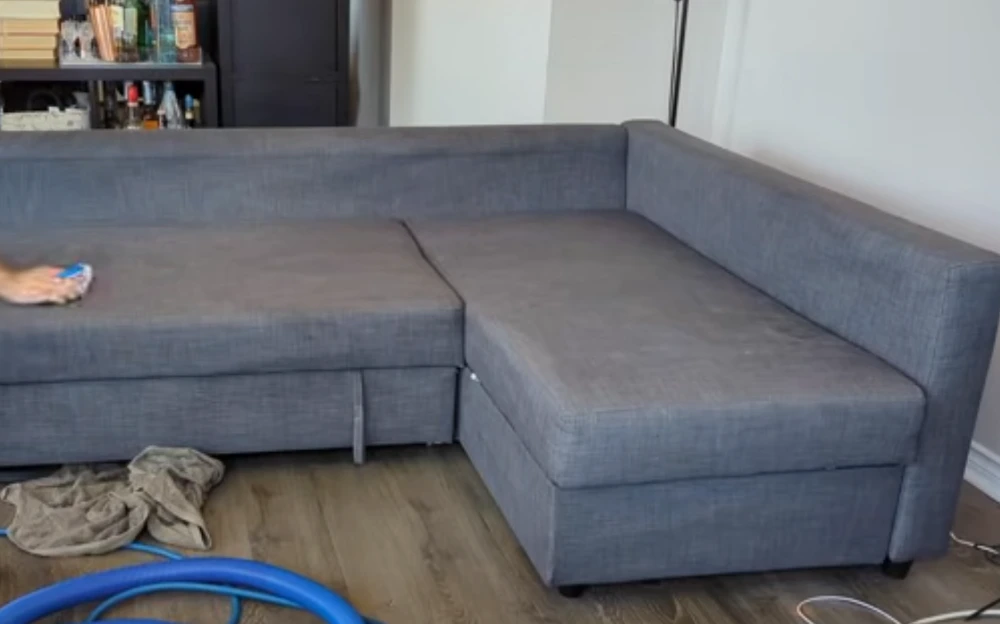
Seat cushions, armrests, and backs take the most contact, so body oils and dust build up there first. Cushion covers are not always removable or washable, so we check before assuming they can come off.
Dining & Accent Chairs
Seats and front edges collect food spots, drink marks, and dust. Woven and textured fabrics hold on to crumbs, so a thorough vacuum comes before any wet cleaning.
Office Chairs & Recliners
Headrests, armrests, and seat fronts see constant contact and show buildup fastest. Heavily used seating often looks darker in those spots than in the rest of the fabric.
Pet-Used Furniture
Pet hair and dander settle deep into fabric, and we treat pet-related spots separately from general soil. For accidents and lingering smells, see our pet stain and odor removal page.
Check the Care Tag Before Anything Else
Most upholstered furniture has a manufacturer’s tag, usually under a seat cushion or along the frame. The code on it tells you what cleaning the fabric can take.
| Code | What it means |
|---|---|
| W | Water-based cleaning products are safe to use. |
| S | Solvent-based (dry cleaning) products only. No water. |
| WS | Either water-based or solvent-based products can be used. |
| X | Vacuum or light brushing only. No water or solvent. |
If your tag says S or X, tell us before we start. Those fabrics may not suit water-based cleaning, and we will advise you on what is suitable.
How to Prepare Your Furniture
To get ready, clear loose items off the furniture, find the care tag, and point out any spots. A few minutes of preparation lets us spend our time where it matters most.
Clear Loose Items and Find the Care Tag
Take blankets, pillows, toys, and décor off the furniture. Then look for the care tag, usually under a seat cushion or along the frame, and note the code or take a photo of it.
Point Out Spots and Past Treatments
Show us food spots, drink marks, pet-related areas, and darker patches on armrests or headrests. If a spill is fresh, blot it rather than rubbing, and hold off on household cleaners, since they can leave residue. Tell us what has already been used.
Ask About Moving and Access
Make sure we can reach each piece easily, and keep pets in another room while we work. When you book, ask what we move or handle and what you should do yourself, so there are no surprises on the day.
What to Tell Us When You Request a Quote
A few details help us give you a clearer quote:
- Which pieces need cleaning (sofa, sectional, chairs, recliners) and how many
- The fabric type or the care tag code, if you can find it
- Any spots, pet-related areas, or heavily used sections
- Anything already used on the fabric, such as a stain remover
What Happens During a Furniture Cleaning Visit?
A visit has three parts: we check the fabric and its care label, we clean it with a method suited to that fabric, and we go over drying and aftercare with you before we leave.
We Check the Fabric and Its Label
Before anything is cleaned, we read the care label and look at the fabric, the cushions, and how worn the piece is. If we’re unsure how the fabric will react, we test a small hidden area first. You can see what the label codes mean in the care labels section.
We Clean It the Way the Fabric Calls For
We vacuum away loose dust and crumbs first, then clean with the method the label allows, using no more moisture than the fabric needs. Seats and armrests, where soil builds up most, get extra attention.
We Go Over Aftercare Before We Leave
We explain how the furniture should dry and when you can use it again. The full details are in the aftercare section below.
How We Clean Upholstery
We clean furniture in four steps: inspect the fabric, vacuum the dry soil, treat spots one by one, then use a method suited to the material. The care tag helps determine what is safe, so we read it first.
We Inspect the Fabric and the Furniture
We check the upholstery type, construction, cushioning, and wear, and read the manufacturer’s care tag. The tag code tells us whether water-based products are safe, so it shapes the method before we do anything else.
We Vacuum Loose Dust and Debris
We vacuum crumbs, pet hair, and dust from cushions, seams, and armrests first. Dry soil is much easier to remove before any moisture is used.
We Treat Spots One by One
Food spills, drink marks, body oils, and pet-related spots each need their own approach. We choose a pre-treatment based on the fabric, the type of spot, and anything already used on it.
We Clean and Explain the Drying
We pick a method that suits the material’s care requirements, with extra attention to delicate upholstery and cushioning. Drying time depends on the fabric, cushion thickness, airflow, and humidity, and we explain how to care for the furniture afterward.
What to expect: cleaning lifts soil and improves many spots. Set-in stains, worn areas, and dye transfer can remain, and some delicate materials may need a gentler approach.
How to Look After Your Furniture While It Dries
Furniture needs to dry completely, including the cushions, before it goes back into regular use. How long that takes depends on the fabric, how thick the cushions are, and the room, so we’ll tell you what to expect for yours.
Let Air Reach the Cushions
Loose cushions dry fastest when they stand on their edge with air moving around them. Run a fan across the furniture, keep your heating or cooling on, and open a window if the weather allows. Thick cushions with foam inside take the longest, so don’t judge by the surface alone.
Keep It Out of Strong Sun and Direct Heat
Strong sunlight and direct heat can fade colors and stiffen some fabrics while they are damp. Choose a bright, well-aired room over a sunny window or a heater, and don’t use a hair dryer or heater to speed things up.
How to Tell It’s Dry
Touch the thickest part of the seat and the seams. The fabric should feel the same temperature as the room, not cool or damp. Press a clean white towel on it for a few seconds: if the towel picks up any moisture, give it more time.
Stay Off It Until It’s Dry
Don’t sit on damp fabric, and keep pets and children away. Dye from dark jeans or new clothes can transfer onto damp fabric, and a seat pressed down while wet can stay creased. Wait until it is completely dry before putting cushions, throws, or pillows back.
If a Mark Comes Back
A spot that looked gone can reappear as the fabric dries, because dirt from deeper down is drawn up with the moisture, and on some natural fabrics such as cotton or linen it can leave a brownish ring. Note where it is and contact us, and we’ll advise on the next step. Please avoid putting another product on it. For persistent marks, see our spot treatment page.
If It Stays Damp Too Long
If the furniture still feels damp well beyond what we told you to expect, or it smells musty, contact us. Foam and padding inside the cushions can hold moisture, and furniture that stays wet for too long can develop odors, so it is better to check than to wait.
Everyday care: vacuum regularly with a soft brush attachment, rotate or flip loose cushions now and then so wear spreads evenly, and keep furniture out of strong direct sun. Check the care label before using any home cleaner, and see the care labels section for what the codes mean.
Common Questions About Your Furniture
Short, direct answers to what people ask most. If your piece is unusual or you can’t find a care label, tell us when you request a quote.
How often should furniture be professionally cleaned?
As a general guide, a sofa or chair in regular use benefits from a professional clean about once every one to two years. Pieces used daily, and furniture in homes with children or pets, may need it more often, while rarely used pieces can go longer between cleans.
What do the letters on a furniture care label mean?
W means a water-based cleaner is safe, S means use a solvent-based cleaner only, WS means either is safe, and X means vacuum or light brushing only, with no water or solvent. The tag is usually under a seat cushion or on the frame. The care labels section explains each code in more detail.
Can every fabric be cleaned the same way?
No. The fabric and its care label decide the method. Some fabrics take water well, while delicate or natural ones may need a gentler approach, so we check the label and the fabric first. If we’re unsure how a fabric will react, we test a small hidden area before cleaning. If your label is missing, see what we do without one.
Will cleaning remove stains from furniture?
Often it improves them, but complete removal can’t be promised. The result depends on what caused the mark, how long it has been there, the fabric, and what has been used on it before. Individual marks sometimes need their own treatment, which is covered on our spot treatment page .
How long does furniture take to dry, and when can I sit on it?
It depends on the fabric, how thick the cushions are, and the room, so there isn’t one time that fits every piece, and we’ll tell you what to expect for yours. Furniture is dry when the fabric feels the same temperature as the room and a clean white towel pressed on it picks up no moisture. Don’t sit on it, or put cushions and throws back, until it is completely dry. There are more tips in the aftercare section.
Will cleaning leave the cushions soaked?
It shouldn’t. We use no more moisture than the fabric needs, and we check the label first because some fabrics can’t take water at all. Cushions with foam inside dry the slowest, which is why airflow matters afterward. The aftercare section shows how to help them dry.
How much does furniture cleaning cost?
The price depends on how many pieces you have, their size, the fabric, and their condition, so we quote after hearing about them. Tell us what you’d like cleaned, roughly how large each piece is, and anything you’re worried about, and request a free quote.
Not Sure What Your Fabric Needs?
Tell us which pieces you’d like cleaned and what the care label says, if you can find it. We’ll let you know what will work for the fabric and give you a free quote.